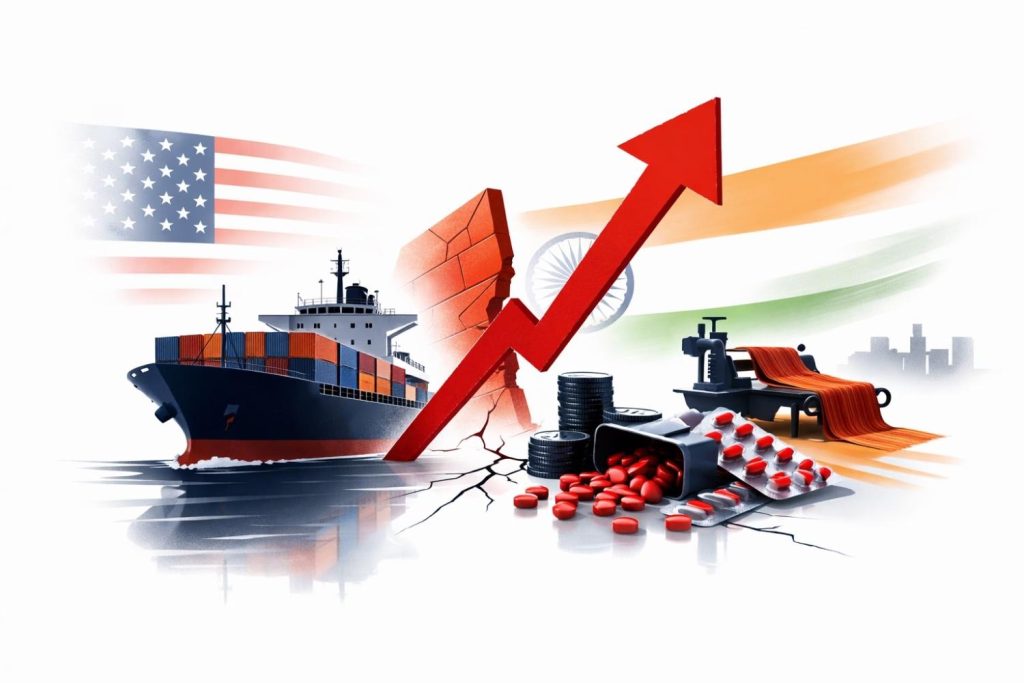
The United States imposes a 10% tariff on selected Indian exports, raising concerns across IT, pharmaceutical and textile sectors.
The United States has imposed a 10% tariff on selected Indian exports, a move that takes effect from today and is expected to impact key sectors of India’s export economy.
The decision comes at a time when global trade remains uncertain and supply chains are already under pressure. For India, the United States is one of the largest export markets. Any new tariff measure directly affects businesses, jobs and foreign exchange earnings.
Here is a detailed look at what the 10% US tariff on Indian exports means for India’s IT, pharmaceutical and textile sectors, and how companies may respond in the coming weeks.
Why the 10% US Tariff Matters for India
The United States is India’s top trading partner. Indian exports to the US include a wide range of products and services such as software services, medicines, textiles, engineering goods and chemicals.
A 10% tariff means American importers will now have to pay extra tax on selected Indian goods entering the US market. This makes Indian products costlier compared to goods from other countries that do not face similar duties.
For exporters, this can lead to lower profit margins, reduced competitiveness, pressure on pricing and possible shifts in global supply chains.
While services such as IT are usually not directly taxed in the same way as goods, broader trade tensions can still affect the sector through regulatory or market pressure.
Impact on India’s IT Sector
India’s IT industry earns a large share of its revenue from the US market. Major companies such as Tata Consultancy Services, Infosys, and Wipro have deep business ties with American clients.
Unlike physical goods, IT services are delivered digitally. A tariff on goods does not directly tax software services in most cases. However, the broader trade environment can still create challenges.
US companies may cut costs due to higher import expenses. Budget tightening can reduce outsourcing spending. Visa and regulatory scrutiny may increase.
If American businesses face higher input costs due to tariffs, they may slow down IT spending. That can affect contract renewals and new deals for Indian firms.
A weaker Indian rupee can partly offset the tariff pressure for exporters. But currency movements are unpredictable and cannot fully protect margins.
For now, analysts expect limited immediate impact on large IT firms. Mid-sized companies that depend heavily on US clients may feel pressure sooner.
Impact on India’s Pharmaceutical Exports
India is a major supplier of affordable generic medicines to the US. The United States is one of the largest buyers of Indian pharmaceutical products.
Companies such as Sun Pharmaceutical Industries, Dr. Reddy’s Laboratories, and Cipla export a significant portion of their products to the American market.
If pharmaceutical exports are covered under the 10% tariff, US importers may have to pay more. This could increase drug prices for American buyers, reduce order volumes or shift sourcing to other countries.
However, the US depends heavily on Indian generics to keep healthcare costs low. This makes a sharp drop in demand less likely in the short term.
Indian drug manufacturers already operate on thin margins due to price competition in the US. A 10% tariff can reduce profitability unless companies absorb part of the cost, pass on some cost to buyers or diversify to other markets.
The long-term impact will depend on whether the tariff is temporary or part of a wider trade policy shift.
Textile Sector Faces Immediate Pressure
The textile and garment industry is among the most vulnerable sectors in any tariff move.
India exports ready-made garments, fabrics and home textiles to the US. The industry is labour-intensive and supports millions of jobs.
American buyers are highly price sensitive. Even a 10% increase in landed cost can push retailers to shift sourcing to countries like Vietnam or Bangladesh, renegotiate contracts or reduce order sizes.
Unlike IT services, textile goods directly face customs duties at ports. This makes the impact immediate.
Many textile exporters operate on tight profit margins. They may struggle to absorb the additional cost.
If orders decline, it can affect factory output, employment and seasonal hiring. Industry bodies are likely to seek government support if the tariff remains in place for long.
How Big Is India-US Trade?
The United States is India’s largest export destination. Bilateral trade between the two countries has grownMany textile exporters operate on tight profit margins. They may struggle to absorb the additional cost.
If orders decline, it can affect factory output, employment and seasonal hiring. Industry bodies are likely to seek government support if the tariff remains in place for long.
How Big Is India-US Trade?
The United States is India’s largest export destination. Bilateral trade between the two countries has grown steadily over the past decade.
Key Indian exports to the US include pharmaceuticals, IT services, textiles and garments, engineering goods, and gems and jewellery.
A tariff on even part of these exports can have ripple effects across supply chains.
What Is the Indian Government’s Response?
The Indian government is expected to closely review the tariff decision and engage with US trade officials through diplomatic channels.
In previous trade disputes, India and the US have used negotiation and trade talks to resolve differences. Officials may explore exemptions for key sectors, phased implementation or bilateral trade discussions.
For now, exporters are waiting for clarity on which products are fully covered and whether exemptions apply.
Global Trade Context
The new tariff comes at a time when global trade policies are becoming more protectionist. Countries are reviewing supply chain dependencies and trade balances.
The US has previously imposed tariffs on several countries as part of broader trade strategies. Such measures are often used to address concerns around trade deficits or domestic industry protection.
However, tariffs can also lead to higher consumer prices, retaliatory measures and supply chain disruptions.
The long-term effect depends on whether both sides choose escalation or negotiation.
Stock Market Reaction
Markets usually react quickly to trade-related announcements.
Export-heavy companies in sectors such as IT, pharma and textiles may see short-term volatility. Investors often reassess revenue exposure to the US, margin risks and future earnings guidance.
However, long-term fundamentals will depend on the duration of the tariff and broader economic conditions.
What Happens Next?
The coming weeks will be critical.
Key factors to watch include official notification details on product coverage, any exemptions for critical sectors, diplomatic talks between India and the US and corporate earnings commentary.
If the tariff remains in place for an extended period, companies may shift manufacturing to other regions, explore alternative export markets or rework pricing strategies.
Diversification beyond the US market could become a stronger priority for Indian exporters.
Will Consumers Feel the Impact in India?
The direct impact on Indian consumers may be limited in the short term. However, if export demand slows, industrial output could decline, job creation may slow in export sectors and investment decisions could be delayed.
For the textile sector especially, employment concerns could become a key issue.
The Bigger Picture for India’s Export Economy
India has been pushing to increase exports and strengthen global trade partnerships. A 10% US tariff on Indian exportscreates fresh uncertainty.
While the IT sector may face indirect pressure, the pharmaceutical and textile sectors could see more immediate effects.
Much will depend on the scope of the tariff, the duration of the measure and the outcome of diplomatic engagement.
For now, businesses are adjusting their strategies as the tariff comes into force from today.
The situation remains fluid. Exporters, investors and policymakers will closely track developments to assess whether this is a short-term trade action or the beginning of a larger shift in India-US trade relations.
As one of India’s most important economic partnerships faces a new challenge, the impact of the 10% US tariff on Indian exports will be watched across industries and markets in the coming months.
Disclaimer: The information presented in this article is intended for general informational purposes only. While every effort is made to ensure accuracy, completeness, and timeliness, data such as prices, market figures, government notifications, weather updates, holiday announcements, and public advisories are subject to change and may vary based on location and official revisions. Readers are strongly encouraged to verify details from relevant official sources before making financial, investment, career, travel, or personal decisions. This publication does not provide financial, investment, legal, or professional advice and shall not be held liable for any losses, damages, or actions taken in reliance on the information provided.
Financial Disclaimer: Markets and investment-related products are subject to risks and fluctuations. Readers should conduct their own research and consider consulting a qualified financial advisor before making any investment decisions.
Last Updated on: Tuesday, February 24, 2026 11:50 am by Economic Edge Team | Published by: Economic Edge Team on Tuesday, February 24, 2026 11:50 am | News Categories: Business
About The Author