
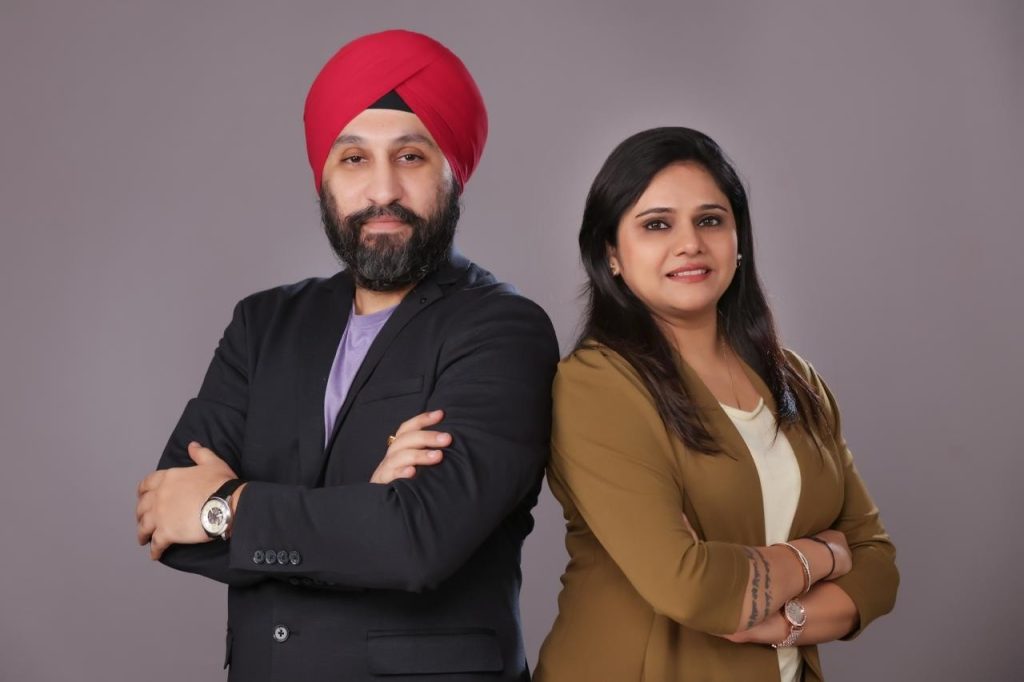
By Arushi Govil and Dalbir Singh, one of India’s most defining IP-creator couple and Co-Founders, Kayhan Entertainment, an integrated IP-led ecosystem with strategic focus on IP ownership and creative exports.
India’s storytelling heritage has always been deeply intertwined with culture. Our epics, folklore, mythology, regional traditions, and oral narratives have shaped generations, preserving values, imagination, and collective identity. These stories have never existed merely as entertainment; they have served as cultural anchors, passed down and reinterpreted over time.
Today, this cultural depth presents one of India’s most significant opportunities in the global creative economy. From a global lens, the Orange Economy has emerged as one of the strongest drivers of cultural influence and economic leadership. Countries like Japan transformed anime into a global cultural force, while South Korea built worldwide influence through K-dramas, music, and original storytelling. Their success demonstrates that audiences no longer seek universalised narratives designed to appeal to everyone. They seek authenticity. The more deeply a story reflects its cultural roots, the more powerfully it resonates across geographies. These nations are not simply exporting content; they are exporting identity, values, and cultural narratives that shape how the world engages with them.
India now stands at a similar inflection point. This is India’s Creative Independence Movement a transition from being a backend execution market to becoming an original creator of global intellectual property, stories, characters, and cultural influence.
For years, Indian studios largely supported global companies through animation production, VFX services, and outsourced creative execution. While this established strong technical capability and operational scale, creative ownership largely remained elsewhere.
The shift today is from production-led scale to ownership-led creative authorship. This is no longer about simply expanding capacity or creating more jobs. It is about enabling India’s transition from service provider to cultural exporter by building Indian-origin stories, characters, and worlds that can participate meaningfully in the global Orange Economy.
Globally, audiences are increasingly gravitating toward culturally authentic storytelling, with the global animation market projected to cross $600 billion by 2030–2033. As content ecosystems grow crowded with familiar narrative frameworks, Indian mythology is emerging as a fresh storytelling force. Its layered worlds, spiritual depth, and philosophical richness offer stories that reconnect audiences to cultural roots while presenting mythology through contemporary, immersive formats.
The worldwide success of anime and other deeply local narratives has demonstrated that audiences are actively seeking original cultural worlds rooted in authenticity. This is where Indian mythology stands apart. Its interconnected universes, moral complexity, and visually rich storytelling traditions offer a narrative landscape that remains largely underexplored on the global stage. This creates a powerful opportunity to transform India’s cultural heritage into original, owned intellectual property ecosystems that can travel globally while preserving the depth and essence of their roots.
However, the larger opportunity extends beyond simply retelling stories. The real potential lies in transforming cultural storytelling into owned intellectual property ecosystems that create sustained value across formats and generations.
When creators own culturally rooted stories, they create assets that can evolve over time and expand across multiple touchpoints. A story can begin as animation and grow into interactive gaming experiences, educational platforms for children, immersive digital worlds, publishing formats, merchandise ecosystems, and live experiences that allow audiences to engage more deeply with the narrative universe.
This is especially relevant for India because our cultural narratives are inherently layered, expansive, and capable of world-building at scale. Indian mythology alone offers interconnected universes, iconic characters, moral complexity, philosophical depth, and multi-generational relevance.
For younger audiences, storytelling is no longer limited to passive consumption. They seek interaction, immersion, and continuity across platforms. This creates an opportunity to reimagine Indian cultural narratives not as static retellings, but as dynamic ecosystems that educate, entertain, and build long-term emotional connection.
At Kayhan Entertainment, this philosophy shapes how we think about creation itself. We are building storytellers, not simply production capability. As a transmedia narrative lab rooted in tech-art convergence, our focus is on creating an environment where artists contribute beyond technical execution participating actively in shaping ideas, building worlds, influencing narratives, and helping create original intellectual property with long-term cultural and commercial relevance.
This distinction matters because the next globally successful Indian IP will not emerge from technical specifications alone. It will emerge from emotion-driven storytelling. For us, tech-art convergence is about using technology to expand narrative possibility while ensuring emotional truth remains at the centre of every story. It is this intersection of creative authorship and technological innovation that will define India’s next generation of globally relevant cultural IP.
About The Author