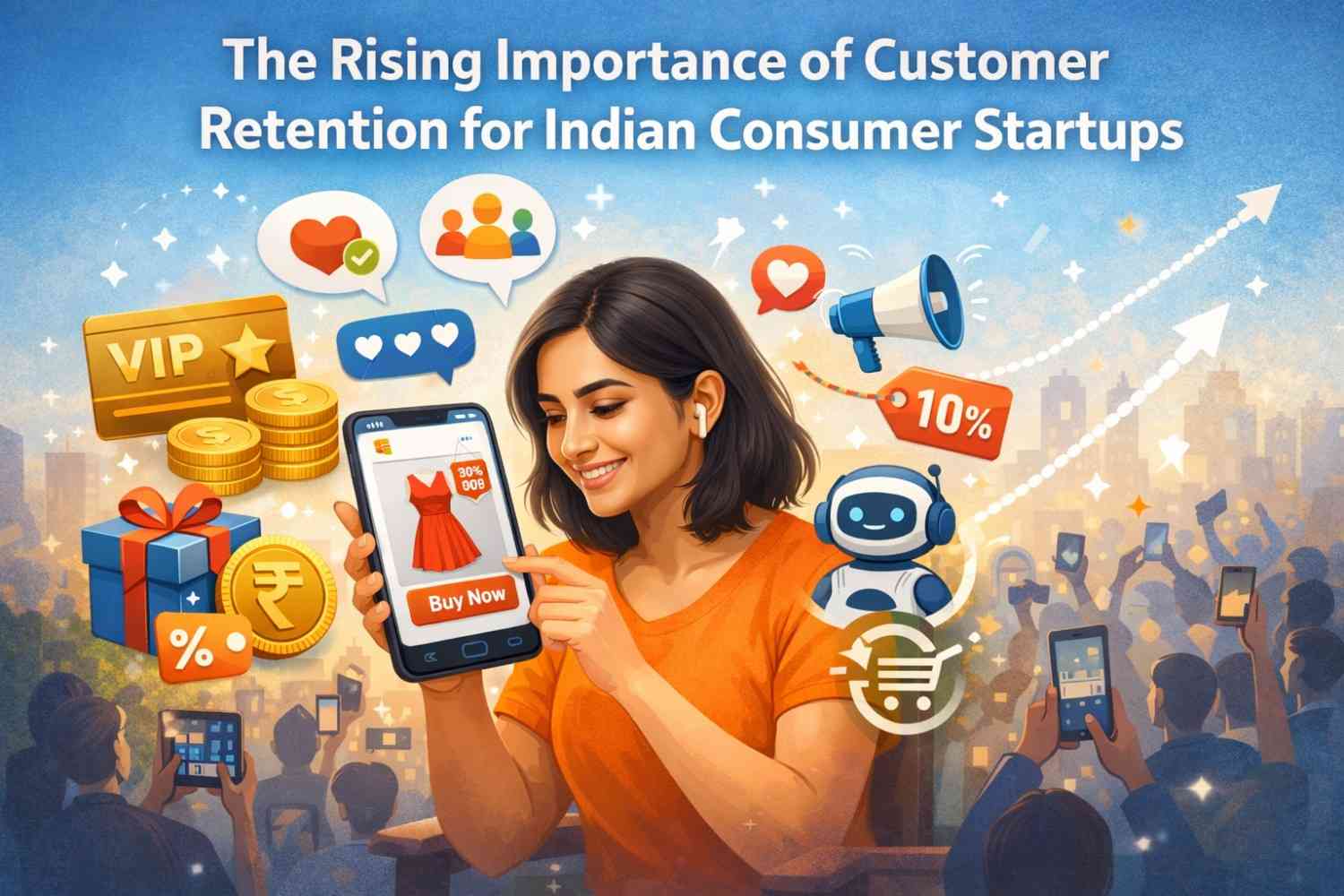
Indian consumer startups are increasingly focusing on customer retention as a key driver of growth and loyalty.
India: In the fast-paced world of Indian consumer startups, the race to acquire new customers has long dominated growth strategies. However, industry insiders say that a new focus is emerging—customer retention. As the competition intensifies across e-commerce, fintech, health-tech, and direct-to-consumer (D2C) brands, keeping existing customers engaged and loyal is becoming just as critical as acquiring them.
According to data from Tracxn, India is home to over 12,000 active consumer startups, with hundreds more entering the market every year. While aggressive marketing campaigns and discount-driven promotions have helped many of these startups attract first-time users, sustaining long-term engagement has proven to be a much more difficult challenge. Modern Indian consumers are highly tech-savvy and increasingly demand personalized experiences. A 2025 KPMG India report notes that more than half of online shoppers expect tailored product recommendations, reflecting a broader shift in consumer expectations that startups can no longer ignore.
Experts point out that retaining a customer is significantly more cost-effective than acquiring a new one. Estimates suggest that acquiring a new customer can be five to seven times more expensive than retaining an existing one. Beyond cost efficiency, retention translates into higher customer lifetime value and stronger brand advocacy, factors that are increasingly influencing investor confidence in early-stage startups. Ritesh Agarwal, CEO of a leading D2C brand, commented, “Acquiring customers is only the first step. The real differentiator in India’s consumer market today is how well you retain them. Repeat customers not only generate more revenue but also become authentic brand ambassadors.”

Startups across the country are responding by reimagining how they engage with their customers. Leading e-commerce players have invested heavily in AI-driven personalization, using algorithms to predict shopping preferences and send targeted recommendations. Health and wellness brands are building communities around their products, encouraging interaction and engagement that extends beyond the point of sale. Many companies are also placing renewed emphasis on customer support, offering seamless returns and responsive assistance to ensure a positive post-purchase experience. Data analytics and predictive modeling are increasingly used to identify at-risk customers, allowing brands to intervene with incentives or personalized communication before disengagement occurs.
Despite these efforts, retention remains a challenge for Indian startups. High competition, price sensitivity, and rapidly evolving consumer tastes mean that maintaining loyalty requires constant innovation and investment. Early-stage startups, in particular, often face resource constraints and lack the technological infrastructure necessary to implement sophisticated retention programs effectively.
Analysts say the stakes are high. Anjali Mehta, a consumer behavior expert at KPMG India, said, “Retention strategies that combine personalization, rewards, and excellent service are driving measurable returns. Startups that focus on retention early are seeing stronger brand loyalty and reduced customer acquisition costs over time.” Investors are taking note as well, increasingly valuing startups with proven retention metrics as a signal of long-term stability and scalability.
Looking ahead, industry observers expect customer retention to become a central pillar of growth strategies for Indian consumer startups. In a landscape where user attention is fleeting and acquisition costs are rising, brands that can deliver consistent value, anticipate customer needs, and foster ongoing engagement are likely to emerge as leaders. For startups in India’s booming consumer sector, success is no longer measured solely by the number of new customers acquired, but by the depth and durability of the relationships they build with their existing base.
Add economicedge.in as a preferred source on google – Click here
Last Updated on: Thursday, January 22, 2026 11:22 am by Economic Edge Team | Published by: Economic Edge Team on Thursday, January 22, 2026 11:22 am | News Categories: Startup
About The Author