
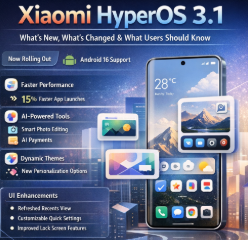
Xiaomi’s Hyper OS 3.1 update — the latest incremental upgrade to its Hyper OS operating system — is making waves in the smartphone community as it begins rolling out, bringing performance enhancements, interface refinements, and smarter AI-powered tools to compatible devices. This update builds on the foundation of Hyper OS 3.0, which itself brought Android 16 support, improved animations, and deeper ecosystem integration.
One key announcement for Hyper OS 3.1 is that it’s being rolled out in phases, starting in China this week and expected to reach international markets shortly after, as Xiaomi tightens eligibility around devices that support Android 16.
Upgraded Performance and Smarter AI Tools
Hyper OS 3.1 focuses on making daily user interactions faster, smoother, and more intelligent:
- Faster App Launches and System Responsiveness: Xiaomi claims up to a 15 % reduction in app launch times and a notable boost in overall responsiveness thanks to deeper Android 16 optimizations.
- AI-Enhanced Functions: The update includes AI-enhanced payments and photo editing, allowing on-device intelligence to optimize images automatically and streamline payment authentication.
- HyperIsland Intelligence Hub: The smart contextual hub continues to evolve, offering app shortcuts, notifications, and real-time actionable suggestions based on usage patterns.
- Dynamic Themes and Visual Polish: A new Dynamic Theme engine draws system colors from wallpapers, lending a more cohesive and personalized look across the UI.
These improvements aim to make everyday tasks feel more seamless and the user interface more intuitive, addressing user feedback for both speed and simplicity.
UI Refinements and Daily Use Enhancements
HyperOS 3.1 includes several visual and usability changes that are subtle but impactful:
- Refreshed Recents View: The Recent Apps menu gets a cleaner, more intuitive layout, helping users switch between tasks more efficiently.
- Smarter Quick Settings: Early reports indicate the possibility of fully customizable quick settings, letting users resize and reposition toggles (such as Wi-Fi or Bluetooth) to suit their workflows.
- Improved Lock Screen Tools: Additional lock screen photo editing features and widget flexibility make personalization easier and more fun.
- Quality-of-Life Tweaks: Enhanced multi-volume controls and better Bluetooth connection memory are among other refinements that make small aspects of daily use more convenient.
These seemingly small visual and functional updates combine to give devices a fresher, more modern feeling without forcing users to relearn their phones.
Device Eligibility and Rollout Scope
A major consideration for users eagerly awaiting Hyper OS 3.1 is eligibility. Xiaomi has tied the update strongly to Android 16, meaning devices that do not qualify for Android 16 will not receive the full Hyper OS 3.1 experience. This has disappointed some owners of older or mid-tier models that remain on Android 15.
Some examples of devices that won’t receive Hyper OS 3.1 include select POCO, Redmi, and older Xiaomi models — even if they currently run Hyper OS 3.0. Xiaomi, however, plans to continue security patches and minor updates on those older builds, maintaining device safety and stability even without the full upgrade.
Real-World Impact and What It Means for Users
In everyday usage, many of Hyper OS 3.1’s changes won’t feel dramatic in isolation, but cumulatively they make devices feel more fluid and responsive. The AI enhancements — particularly in payments and photo tools — cater directly to the growing demand for intelligent, context-aware mobile experiences.
For users with supported flagships or recent mid-range devices, this update promises a noticeable step up in how quickly apps open, how smoothly animations run, and how smart the OS feels in handling repetitive tasks and suggestions.
As Xiaomi continues to expand Hyper OS across phones, tablets, and IoT products, 3.1 also lays groundwork for tighter ecosystem integration that could become more prominent in future releases.
Summary: Hyper OS 3.1 represents a thoughtful, incremental upgrade focused on performance, personalization, and intelligent features. While eligibility limitations have stirred mixed reactions, the update’s improvements are poised to deliver a smoother, smarter mobile experience — especially on devices running Android 16.
Last Updated on: Friday, January 23, 2026 1:08 pm by Economic Edge Team | Published by: Economic Edge Team on Friday, January 23, 2026 1:08 pm | News Categories: Startup, Brand Post, Entertainment
About The Author