
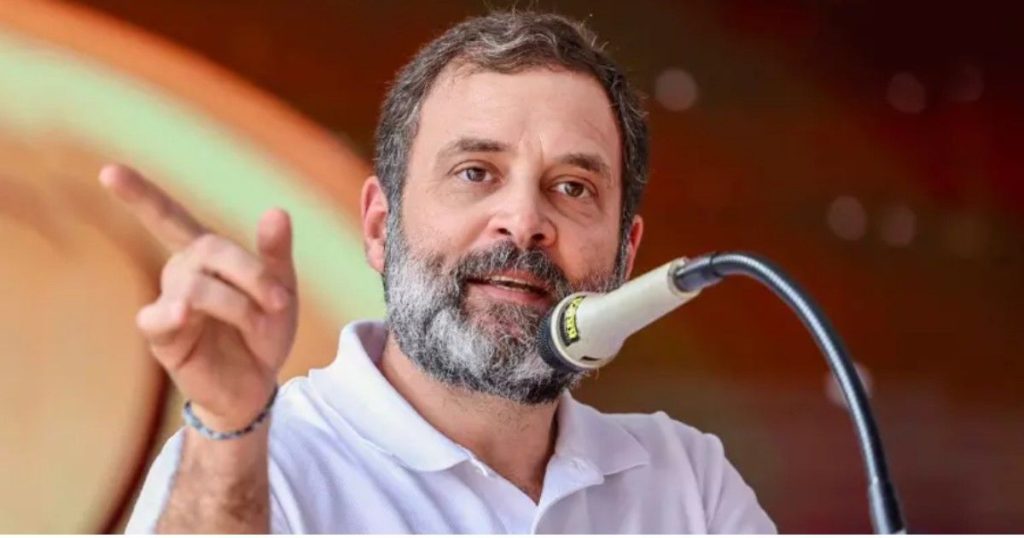
The Karnataka High Court on Tuesday quashed a defamation case filed against Rahul Gandhi and several other leaders of the Indian National Congress, bringing relief to the opposition party in a politically sensitive matter linked to the “corruption rate card” advertisements.
The case related to advertisements released by the Congress during the Karnataka Assembly election campaign, which alleged the existence of a “40 per cent commission” culture under the previous Bharatiya Janata Party-led state government. A private complaint had alleged that the advertisements were defamatory and harmed the reputation of individuals named in the plea.
Court’s observations in the Rahul Gandhi defamation case
While allowing the petitions filed by Rahul Gandhi and other Congress leaders, the Karnataka High Court held that the complaint did not meet the legal threshold required to sustain criminal defamation proceedings. The court observed that the allegations in the complaint were broad in nature and failed to establish specific, individual harm necessary under defamation law.
The court also noted that political criticism and campaign messaging, when not directed at identifiable individuals, cannot automatically give rise to criminal defamation. Based on these findings, the proceedings pending before the lower court were set aside.
The High Court emphasised that defamation law requires clear identification of an aggrieved individual and specific harm to reputation. In the absence of these elements, criminal proceedings cannot be sustained. The court therefore concluded that allowing the case to continue would amount to an abuse of the legal process.
Background of the case
The Rahul Gandhi defamation case stemmed from Congress advertisements published in newspapers and circulated online during the 2023 Karnataka elections. The ads accused the then state government of institutionalised corruption, using the phrase “corruption rate card” to highlight alleged irregularities.
Following the publication of these advertisements, a complaint was filed seeking criminal action against Rahul Gandhi and other Congress leaders, claiming that the statements damaged reputations. The accused leaders had challenged the complaint before the Karnataka High Court, arguing that the case was politically motivated and legally unsustainable.
Political and legal significance
The ruling is seen as significant in the context of election-related speech and political campaigning. Legal experts note that courts have consistently drawn a distinction between personal defamation and broader political criticism, especially during election campaigns.
For the Congress, the quashing of the Rahul Gandhi defamation case removes a legal hurdle linked to its campaign messaging in Karnataka. The party has maintained that the advertisements were based on public discourse and reflected allegations that were already part of the political debate at the time.
The decision allows the party to maintain that its campaign statements fell within the scope of political commentary rather than personal आरोप. Congress leaders have stated that the advertisements reflected issues discussed in the public domain and were intended to highlight governance concerns raised during the election campaign.
What lies ahead
With the Karnataka High Court’s order, the criminal defamation proceedings in this matter stand closed unless challenged before the Supreme Court. The judgment is likely to be cited in future cases involving political advertisements and campaign-related statements.
The development adds to a series of recent court rulings that underline the need for clear legal standards when criminal defamation laws are invoked in the political arena, particularly during elections.
Legal experts note that such rulings help reinforce the balance between protecting individual reputation and safeguarding free political expression. Clear judicial guidance is seen as important to prevent misuse of criminal defamation provisions and to ensure that election campaigns remain within constitutional and legal boundaries.
Add Economic Edge as a preferred source on Google – Click Here
Last Updated on: Tuesday, February 17, 2026 3:27 pm by Economic Edge Team | Published by: Economic Edge Team on Tuesday, February 17, 2026 3:27 pm | News Categories: Politics
About The Author