
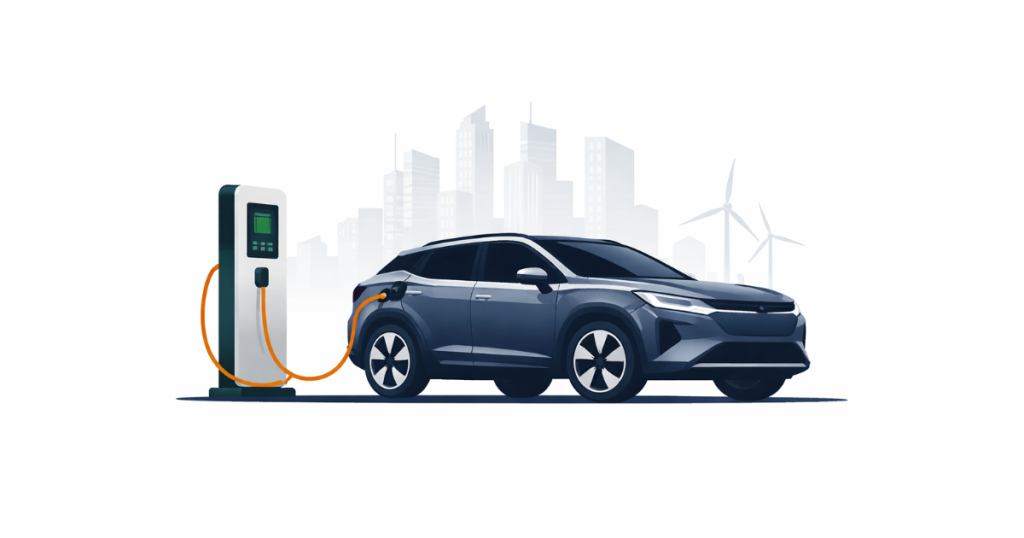
Mahindra expands its electric vehicle lineup as India’s EV market sees strong growth in 2026.
India’s electric vehicle market is entering a new phase, and Mahindra is positioning itself at the centre of this shift. As fuel prices remain high and cities push for cleaner mobility, demand for Electric Vehicles (EVs) is rising steadily across the country.
Mahindra, one of India’s largest automobile manufacturers, has announced an aggressive roadmap for its electric vehicle portfolio. The company is expanding its EV lineup across SUVs and passenger vehicles, aiming to compete strongly with Tata Motors, Hyundai, MG Motor, and global players entering India.
For Indian buyers, this matters today because new Mahindra electric vehicles are expected to offer higher range, advanced technology, and competitive pricing. The company is also investing heavily in battery technology and production capacity within India.
Here is a detailed look at Mahindra’s electric vehicle strategy, upcoming launches, pricing expectations, and what it means for Indian consumers.
Mahindra’s EV Strategy: Focus on SUVs and Mass Adoption
Mahindra has made it clear that its electric vehicle strategy will focus strongly on electric SUVs, a segment where the brand already has a strong identity.
The company has introduced a new EV sub-brand to separate its electric models from traditional petrol and diesel vehicles. These upcoming models are built on dedicated electric platforms instead of modified fuel-based platforms.
This approach allows better battery placement, improved range, and more cabin space.
Mahindra’s goal is simple
Expand EV presence in both urban and semi-urban India
Offer premium design and technology
Keep pricing competitive for Indian buyers
The company has also announced plans to increase local manufacturing of EV components to reduce costs and improve supply chain stability.
Upcoming Mahindra Electric Vehicles in India
Mahindra has confirmed multiple electric SUV models that are expected to launch in phases.
Mahindra XUV.e Series
The XUV.e lineup is expected to be one of the main pillars of Mahindra’s EV strategy. These models are likely to offer
Modern coupe-style SUV design
Advanced driver display systems
Long driving range suitable for highway use
Industry reports suggest that some models could offer a range of over 400–500 kilometres on a single charge, depending on the battery pack.
Mahindra BE Series
The BE series is designed as a bold, futuristic electric SUV lineup. These models will target younger buyers looking for sporty design and connected technology.
Expected features include
Large touchscreen infotainment systems
Connected car technology
Advanced safety features
Fast charging capability
Exact launch dates and prices will be officially announced by the company, but market expectations suggest gradual launches between 2026 and 2027.
Mahindra Electric Vehicle Expected Price Range
Pricing will play a critical role in Mahindra’s EV success.
While final prices are yet to be officially declared, industry estimates indicate
Entry-level Mahindra EVs could start around ₹18 lakh–₹20 lakh (ex-showroom)
Mid-range electric SUVs may fall in the ₹22 lakh–₹28 lakh bracket
Premium variants could go beyond ₹30 lakh
These prices place Mahindra in direct competition with Tata’s higher-end EVs and Hyundai’s electric offerings.
Government incentives under EV policies may further reduce on-road costs in certain states.
Battery Technology and Charging Infrastructure
One of the biggest concerns among Indian EV buyers is charging availability and battery reliability.
Mahindra has announced plans to
Use advanced lithium-ion battery packs
Improve battery thermal management for Indian climate conditions
Offer fast-charging support
Fast charging is expected to allow significant charging within 30–40 minutes, depending on infrastructure and battery size.
However, nationwide charging coverage still remains uneven. Metro cities like Delhi, Mumbai, Bengaluru, and Hyderabad are seeing faster charger deployment compared to smaller towns.
For buyers in Tier-2 and Tier-3 cities, home charging will remain the primary solution.
Why Mahindra’s Electric Vehicle Expansion Is Important for India
Mahindra’s EV expansion is significant for several reasons.
Strong Domestic Manufacturing
Mahindra’s focus on local production supports the Make in India push. Increased domestic EV manufacturing reduces dependence on imports and strengthens the supply chain.
Boost to India’s EV Market Competition
More competition means better pricing and improved features for buyers. Tata Motors currently dominates India’s EV passenger vehicle segment, but Mahindra’s aggressive entry could reshape the market.
Cleaner Urban Mobility
Electric vehicles reduce tailpipe emissions. As air pollution remains a major issue in Indian cities, wider EV adoption can help improve urban air quality.
Long-Term Fuel Savings for Consumers
Although EVs often have higher upfront prices, running costs are lower compared to petrol and diesel vehicles. Electricity costs per kilometre are generally lower than fuel expenses.
Mahindra vs Tata: The EV Competition to Watch
In the Indian electric vehicle market, the biggest comparison will be between Mahindra and Tata Motors.
Tata currently leads the EV segment with popular models like the Nexon EV and Tiago EV. Mahindra will try to challenge this dominance through
Premium SUV positioning
Longer range models
Advanced design language
Strong brand loyalty in SUV segment
The competition could benefit consumers by driving innovation and competitive pricing.
What Buyers Should Consider Before Choosing a Mahindra EV
Before booking any electric vehicle, buyers should evaluate
Daily driving distance
Access to home charging
Availability of public chargers in their area
Battery warranty coverage
Resale value expectations
Most EV manufacturers, including Mahindra, are expected to offer battery warranties of around 8 years or more, though official details will vary by model.
Investment and Future Roadmap
Mahindra has committed significant investment toward electric mobility over the coming years. The company aims to scale production capacity and expand exports as well.
The broader Indian EV ecosystem is also growing, supported by central and state government policies promoting electric mobility.
By 2030, India aims to significantly increase EV adoption across vehicle categories. Mahindra’s strong push into electric SUVs aligns with this national target.
Will Mahindra Electric Vehicles Succeed in India
The success of Mahindra’s electric vehicle strategy will depend on three main factors
Competitive pricing
Reliable battery performance
Charging infrastructure expansion
If Mahindra delivers strong range, modern features, and practical pricing, it has the potential to become a major EV player in India.
SUV buyers who already trust the Mahindra brand may find the electric transition easier compared to switching to a new brand.
Final Outlook: A Crucial Phase for Mahindra and India’s EV Market
The year 2026 could mark a turning point for Mahindra’s electric vehicle journey. With multiple electric SUV launches planned and strong investment in EV technology, the company is clearly preparing for a long-term shift away from fossil fuel vehicles.
For Indian consumers, this means more choices, better technology, and increased competition in the electric vehicle segment.
As India’s automobile market moves steadily toward cleaner mobility, Mahindra’s electric vehicle push is not just a company update — it is a key development in the country’s transportation future.
The coming months will reveal pricing, specifications, and launch timelines. But one thing is clear: Mahindra’s electric vehicle strategy is now central to India’s evolving EV story.
Disclaimer: The information presented in this article is intended for general informational purposes only. While every effort is made to ensure accuracy, completeness, and timeliness, data such as prices, market figures, government notifications, weather updates, holiday announcements, and public advisories are subject to change and may vary based on location and official revisions. Readers are strongly encouraged to verify details from relevant official sources before making financial, investment, career, travel, or personal decisions. This publication does not provide financial, investment, legal, or professional advice and shall not be held liable for any losses, damages, or actions taken in reliance on the information provided.
About The Author