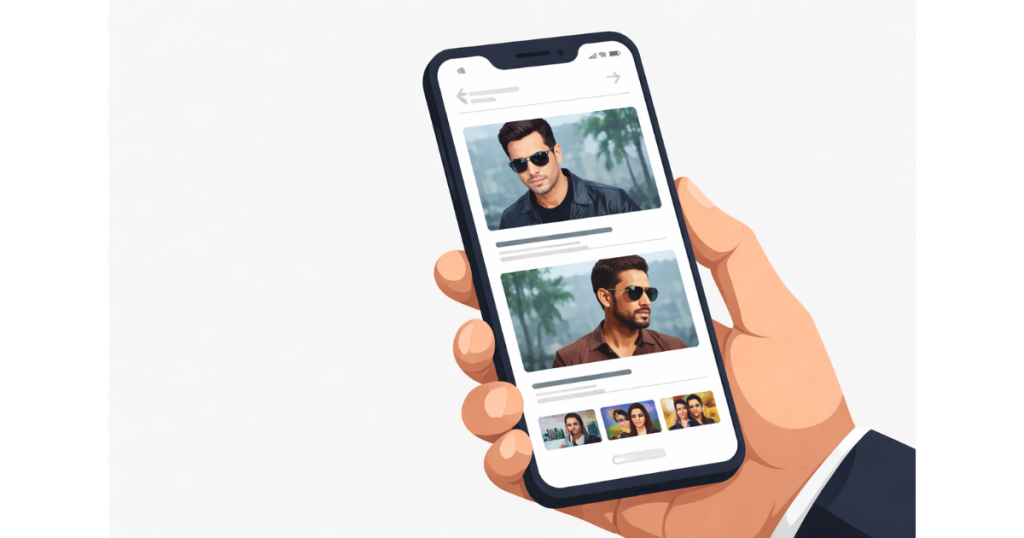
Strategic use of high-authority celebrity names like Salman Khan and Ajay Devgn can improve Google Discover visibility for entertainment news publishers.
In India’s fast-moving digital news space, visibility on Google Discover can decide whether a story gets 10,000 views or 10 lakh views. With mobile consumption at record levels, Discover has become a major traffic source for entertainment and general news websites.
One strategy is gaining attention among digital editors and SEO teams — the smart use of high-authority celebrity names like Salman Khan and Ajay Devgn to trigger broader entity-based recommendations.
This is not about clickbait. It is about understanding how Google’s entity system works and how reader behavior shapes content distribution.
When done correctly, using multiple strong celebrity entities in a headline or story can increase the chances of appearing in related feeds.
But it must be done with care, context, and accuracy.
Understanding Google Discover and Entity-Based Recommendations
Google Discover does not work like traditional search.
It does not wait for users to type queries.
Instead, it shows content based on user interests, browsing history, trending entities, engagement signals, and content freshness.
Google’s system relies heavily on entities — clearly defined people, places, brands, and topics.
For example, Salman Khan is a strong entertainment entity. Ajay Devgn is a strong Bollywood entity. Bigg Boss is a television entity. Singham is a film franchise entity.
When multiple strong entities appear together in a relevant and factual context, Google may connect the story to a wider audience pool.
This increases the probability of showing up in Discover feeds, appearing in related stories, and being recommended to fans of both celebrities.
Why Salman Khan and Ajay Devgn Are High-Authority Entities
Certain celebrities carry more digital weight than others.
Salman Khan and Ajay Devgn are two such names in India.
Salman Khan’s Digital Power
Salman Khan consistently trends for film releases, Bigg Boss updates, box office numbers, and public appearances.
His name has a strong search history across years. Even minor updates about him often gain traction.
Ajay Devgn’s Consistent Relevance
Ajay Devgn has built strong recognition through the Singham franchise, the Drishyam series, major box office releases, and OTT announcements.
He also has appeal across urban and small-town audiences.
When these two names appear in a credible story, the entity signals become stronger.
But there is an important rule.
Context Is Critical: Avoid Misleading Use
Google’s systems are designed to detect manipulation.
Using celebrity names without relevance can increase bounce rate, reduce trust signals, hurt Discover visibility, and trigger content quality reviews.
If a story is about a film box office trend and mentions Salman Khan and Ajay Devgn in comparison with factual data, that is relevant.
If a story uses their names in the headline without real connection, it may be flagged as low quality.
High traffic is driven by accuracy, clarity, and value.
How Multiple Celebrity Mentions Expand Reach
When a story mentions two or more strong Bollywood entities in a natural way, three things can happen.
Broader Audience Matching
If a user frequently reads Salman Khan stories and another reads Ajay Devgn updates, a combined story may reach both segments.
This widens Discover distribution.
Higher Engagement Probability
Bollywood readers often follow multiple stars.
Stories comparing box office numbers, upcoming releases, festival clashes, or industry trends tend to perform better.
A factual headline like “Salman Khan and Ajay Devgn Among Top Stars Dominating Eid and Diwali Box Office Trends” connects multiple fan bases in one story.
Stronger Related Story Placement
Google clusters stories around entities.
When your article clearly connects to two major entities, it has more chances of appearing under related content sections about Salman Khan or Ajay Devgn.
This cross-linking effect can multiply traffic.
The SEO Strategy Behind Multi-Entity Headlines
To optimize for Discover and Search without overdoing it, newsrooms follow proven methods.
Clear, Factual Headline Structure
Use natural placement of celebrity names.
Example format: Salman Khan and Ajay Devgn: What Their Upcoming Releases Mean for Bollywood in 2026
Avoid exaggeration. Avoid fake rivalry angles. Avoid misleading language.
Fresh Angle and Timely Hook
Google Discover prefers new updates, timely developments, trending discussions, and official announcements.
If Salman Khan announces a project and Ajay Devgn’s film releases in the same season, a comparison story becomes timely.
Freshness is key.
Mobile-Friendly Formatting
Short paragraphs. Clear subheadings. Highlighted key facts.
Discover is primarily mobile-driven in India.
Why Discover Traffic Is Different From Search Traffic
Search traffic depends on keyword queries.
Discover traffic depends on user interest profiles, entity relevance, engagement rate, and content authority.
A well-structured story using strong entities can sometimes get Discover impressions even without high search volume keywords.
This makes entertainment content highly competitive.
Risks of Overusing Celebrity Names
There is a thin line between optimization and misuse.
If every story includes Salman Khan and Ajay Devgn unnecessarily, Google may treat the pattern as low quality.
Warning signs include high clicks but low read time, sudden traffic drops, and reduced Discover impressions.
Google prioritizes helpful content.
Quality always wins in the long run.
Best Practices for Indian Newsrooms in 2026
To compete with top entertainment portals, digital teams should focus on strong entity research.
Before publishing, confirm that the celebrity is directly related to the story, there is a factual update, and the context is clear.
Accurate data and verified information are essential.
Do not invent box office numbers. Do not create fake statements. Do not speculate without source clarity.
Balanced coverage is also important.
Instead of forcing names into unrelated stories, build natural content such as box office comparison features, industry trend analysis, festival release calendars, and streaming platform competition stories.
This allows multiple celebrity mentions organically.
How Google Discover Identifies Strong Entities
Google’s knowledge graph connects people, films, brands, and events.
When a story includes structured headlines, clear entity names, contextual paragraphs, and internal linking to related content, the system can better understand topic authority.
Adding structured data markup can help search engines understand Person, Movie, and Organization entities.
But structured data alone cannot fix weak content.
The core remains useful, timely, and reader-first journalism.
The Bigger Picture: Discover Is About Trust
Indian audiences are quick to identify sensationalism.
Websites that rely only on celebrity names without substance may see short-term spikes.
But long-term Discover growth depends on consistent publishing, clean headlines, accurate updates, fast-loading pages, and strong E-E-A-T signals.
Experience, expertise, author credibility, and editorial transparency matter.
Conclusion: Smart Entity Use, Not Name Dropping
Leveraging multiple high-authority celebrity names like Salman Khan and Ajay Devgn can expand reach across Google Discover.
But the strategy works only when the connection is real, the timing is relevant, the content adds value, and the reporting is accurate.
In 2026, Google’s systems are smarter than ever.
Discover rewards credibility, not manipulation.
For Indian news publishers aiming for high traffic and sustainable growth, the formula is clear.
Use strong entities wisely. Deliver genuine news. Keep readers first.
That is how stories rise above competition and stay there.
Disclaimer: The information presented in this article is intended for general informational purposes only. While every effort is made to ensure accuracy, completeness, and timeliness, data such as prices, market figures, government notifications, weather updates, holiday announcements, and public advisories are subject to change and may vary based on location and official revisions. Readers are strongly encouraged to verify details from relevant official sources before making financial, investment, career, travel, or personal decisions. This publication does not provide financial, investment, legal, or professional advice and shall not be held liable for any losses, damages, or actions taken in reliance on the information provided.
About The Author